Becoming a Critical Care Nurse: A Scoping Review of Newly Graduated Nurses’ Professional Transition to Practice
CJCCN: Volume 37, Number 2
William Tessier, MSc, RN, Martin Charette, PhD, RN, Isabelle Ledoux, PhD, RN, Mélanie Lavoie-Tremblay, PhD, RN, Xavier Giroux, MSc, MBA, RN, and Sabrina Blais, MSc, RN.
Abstract
Background and purpose
Healthcare facilities are employing various strategies to combat nursing shortages, including recruiting newly graduated nurses (NGNs), defined as registered nurses within their first two years of clinical practice following completion of their initial nursing education, to specialized care settings. Despite their solid foundation of knowledge and skills, NGNs face major challenges, particularly in critical care settings such as emergency departments or intensive care units, where the gap between theory and practice is pronounced. Therefore, this manuscript aims to map the current state of knowledge on the professional transition of NGNs in critical care settings, describe the challenges they experience, and identify the contexts and factors that promote a safe transition to practice.
Methods and procedures
This scoping review followed the Joanna Briggs Institute methodology and PRISMA-ScR guidelines. A comprehensive literature search was conducted across six databases. Eligible studies focused on NGNs’ professional transition in critical care settings.
Results
Analysis of the included studies revealed five key aspects of the professional transition in critical care settings: (1) preparation for clinical practice, (2) adaptation to critical care, (3) skill development, (4) psychological and emotional challenges and (5) the need for support and guidance. Among these, psychological and emotional challenges constitute the most frequently reported aspect, underscoring the significant mental burden associated with the transition experience. Adaptation to critical care is another widely documented aspect, highlighting the many adjustments necessary for a successful professional transition.
Discussion and Conclusion
Important gaps remain, especially in terms of clinical preparation, skill development, and availability of structured support for NGNs in critical care settings. These findings underscore the need for a collective re-examination of how academic education can be better aligned with clinical practice, as well as the implementation of structured transition programs and high-quality support and guidance.
Keywords: Newly graduated nurses, professional transition, critical care nursing, scoping review
Implications for nursing education and practice
The findings of this review reinforce the following avenues for action to promote a healthy professional transition in critical care settings:
- Strengthening the integration of theory and practice by offering clinical placements that more closely reflect the realities of critical care environments.
- Improving collaboration between educational institutions and clinical practice settings to ensure that theoretical knowledge is seamlessly incorporated into practice.
- Implementing evaluation tools that allow longitudinal tracking of skill development during the first year of practice.
- Developing structured transition programs focused on clinical support and the progressive development of competencies and adjusting professional expectations by acknowledging the time required to develop expertise and autonomy in critical care practice.
Introduction
For more than 50 years, reality and transition shocks have been accepted as inevitable aspects of newly graduated nurses’ (NGNs’) transition process from education to practice (Duchscher, 2008; Duchscher & Windey, 2018; Kramer, 1974). Transition shock occurs in the weeks or months following entry into professional practice, stemming from an alarming realization that the roles, responsibilities, knowledge, and relationships in which the NGNs become involved are more difficult, dynamic, and intense than expected (Duchscher, 2009). This period triggers feelings of anxiety and incompetence as NGNs are confronted with the reality of nursing practice. For them, negative emotions or perceptions of their role or environment during the first three months of practice are frequently associated with the intention to leave their job within their first year of professional practice (McIntyre et al., 2024; Reebals et al., 2022; Wakefield et al., 2023).
To combat this, NGNs need consistency, predictability, stability, and familiarity during the first months of their professional practice (Charette et al., 2019; Duchscher, 2008; Wakefield et al., 2023). Scholars have even recommended that NGNs begin their professional practice in acute care settings such as medicine, surgery, and geriatrics, where care is more predictable (Duchscher, 2008). However, the workforce shortage in several sectors have resulted in healthcare organizations employing various strategies to address the crisis, including recruiting NGNs into specialized care settings (Baudoin et al., 2022; Bryant et al., 2024; Hodgson et al., 2024). For example, in the province of Quebec, the percentage of NGNs who began their careers in a critical care unit rose from approximately 10% in 2017–2018 to nearly 20% in 2022–2023 (OIIQ, 2023).
Despite their solid foundation of knowledge and skills, professional transition poses a major challenge for NGNs particularly within critical care settings such as emergency departments or intensive care units, where the gap between theory and practice is pronounced (Wakefield et al., 2023). Although several studies have focused on their professional transition in acute care settings, few have explored this phenomenon in critical care settings such as emergency departments and intensive care units. Thus, understanding the various aspects of professional transition—the process through which NGNs acquire the skills, knowledge, and values of nursing culture in the context of critical care—is crucial (Duchscher, 2009).
Objectives
The main objective of this scoping review is to map the current state of knowledge on the professional transition of NGNs within critical care settings. More specifically, it aims to:
- explore the aspects of the professional transition of NGNs in critical care,
- describe their perceptions and experiences regarding the professional transition within critical care settings, and
- identify the contexts and factors that promote a healthy professional transition to improve integration and support practices for NGNs at the start of their careers.
Methods and procedures
A scoping review was conducted in accordance with the Joanna Briggs Institute (JBI) methodology and the Preferred Reporting Items for Systematic reviews and Meta-Analyses extension for Scoping Reviews (PRISMA-ScR extension) (Peters et al., 2021; Tricco et al., 2018). The former was chosen for its rigour, transparency, and flexibility, as well as its alignment with PRISMA-ScR reporting standards.
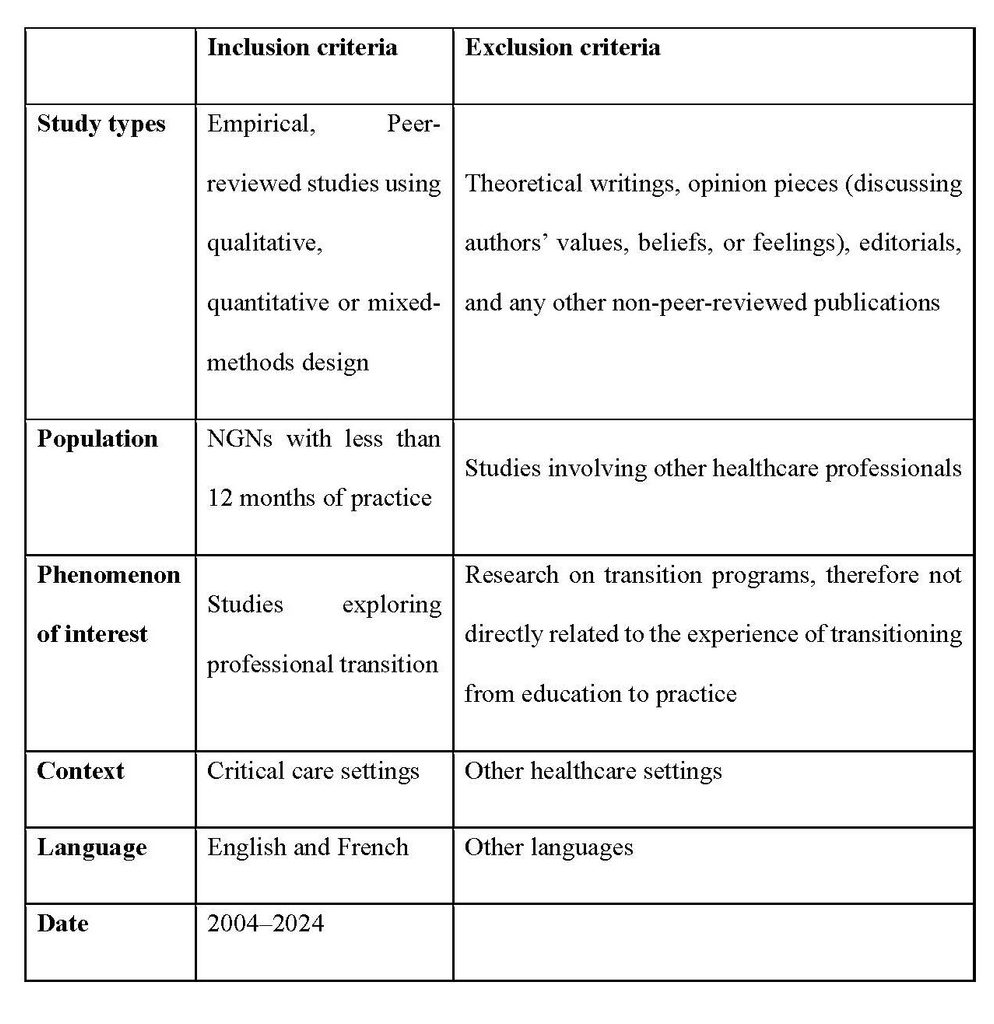
Eligibility criteria were developed using the Population-Concept-Context (PCC) framework, as recommended by JBI (Peters et al., 2021). The population comprised newly graduated nurses, defined as registered nurses within their first year of clinical practice following completion of their initial nursing education. The concept focused on the professional transition experience. The context included critical care settings such as intensive care units and emergency departments. A detailed description of the inclusion and exclusion criteria structured according to the PCC framework is presented in Table 1.
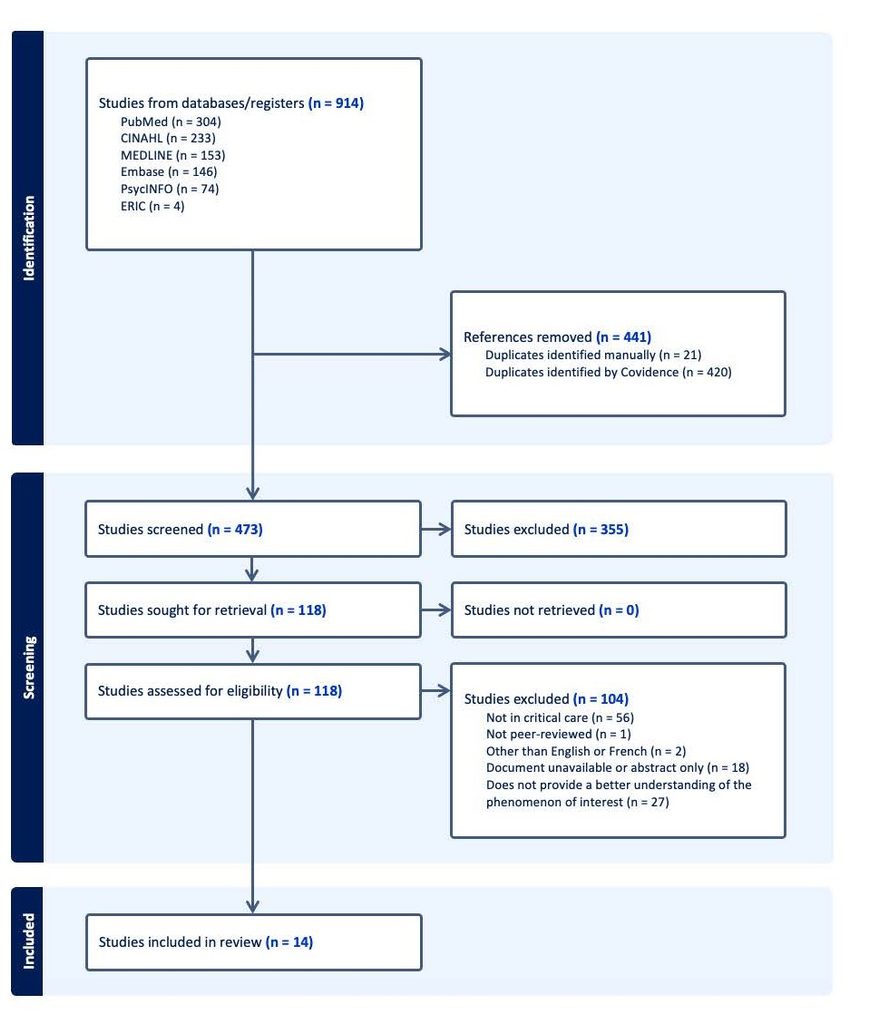
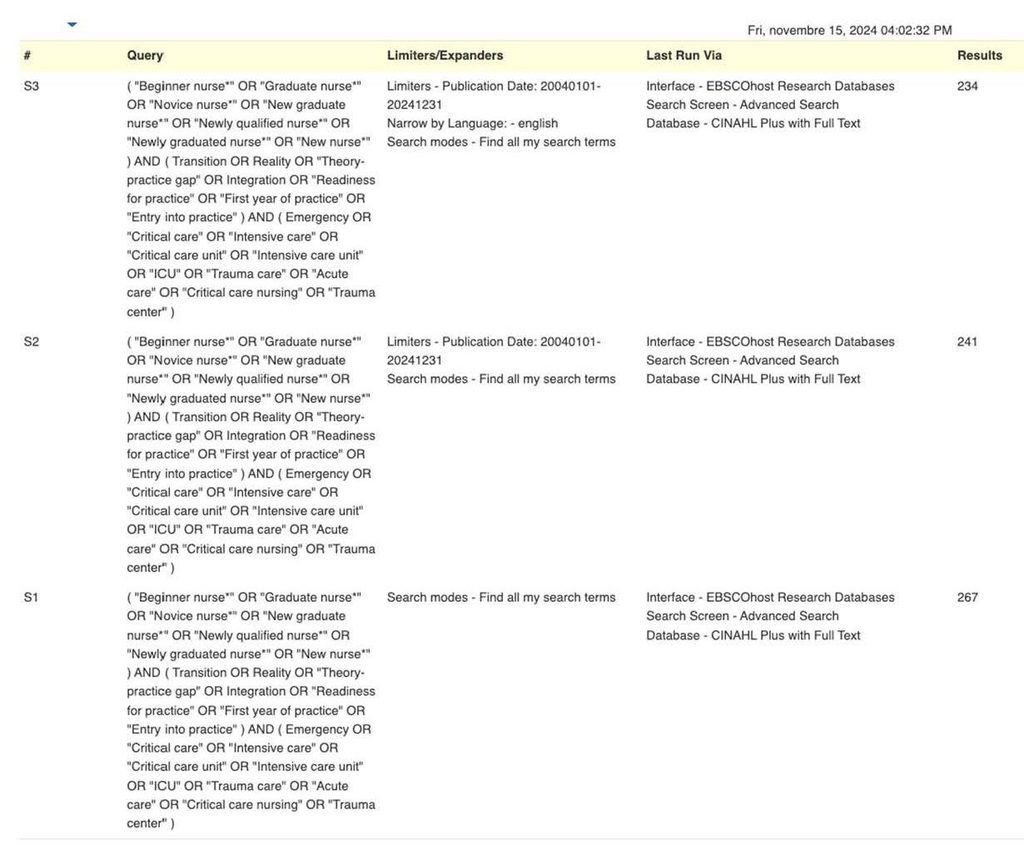
The databases CINAHL, MEDLINE, EMBASE, PubMed, PsycINFO, ERIC, and Érudit were searched for publications from 2004 to 2024. The search strategy (presented in the Supplementary Material) was developed by the research team in collaboration with a university librarian. Covidence software (Veritas Health Innovation, 2022) was used to gather and screen articles. The stages of the identification, selection, and data extraction were conducted independently by two team members (Author E and Author F), each of whom reviewed all articles. The initial search identified 914 potential articles, which were then screened for inclusion according to the predefined criteria.
Table 1. Eligibility criteria for articles
Study selection process (screening)
Titles and abstracts were screened independently by two members of the research team (Author E and Author F) following a calibration exercise with 25 articles to ensure consistency in the application of the inclusion and exclusion criteria. This step made it possible to exclude 441 duplicates and 355 other articles that clearly did not meet the inclusion criteria. The remaining 118 articles were retrieved and independently reviewed in full text following a second calibration test with 10 articles to confirm alignment between reviewers. At this stage, 104 articles were excluded. The reasons for exclusion are presented in Figure 1, in a PRISMA flowchart. Throughout the process, conflicts were resolved by a third person (Author A). Finally, 14 articles were included in the study.
Figure 1. PRISMA flowchart
Date extraction and analysis
Data extraction was conducted by two independent researchers (Author A and Author B) using an Excel-based data chart to extract information from each article, including the title, first author’s name, year of publication, location of the study, study objective, methodology used, population, sample size, practice setting, and findings. The extracted data were compared and synthesized into a single document by the same researchers. A descriptive synthesis of the results was then conducted. Data extracted from the 14 studies were analyzed inductively to identify recurring categories. These categories were iteratively refined and grouped into five main aspects of NGNs’ professional transition in critical care.
Results
Table 2 presents a synthesis of the 14 articles included in this review. Eleven were qualitative, two were quantitative, and one used a mixed-methods design. The majority of these studies were conducted in intensive care units (n = 10), while a smaller number were conducted in emergency departments (n = 4). Geographically, most studies were carried out in North America (n = 9), while three were conducted in Europe, one in Asia, and one in Oceania, highlighting the predominance of North American literature on professional transition in critical care settings.
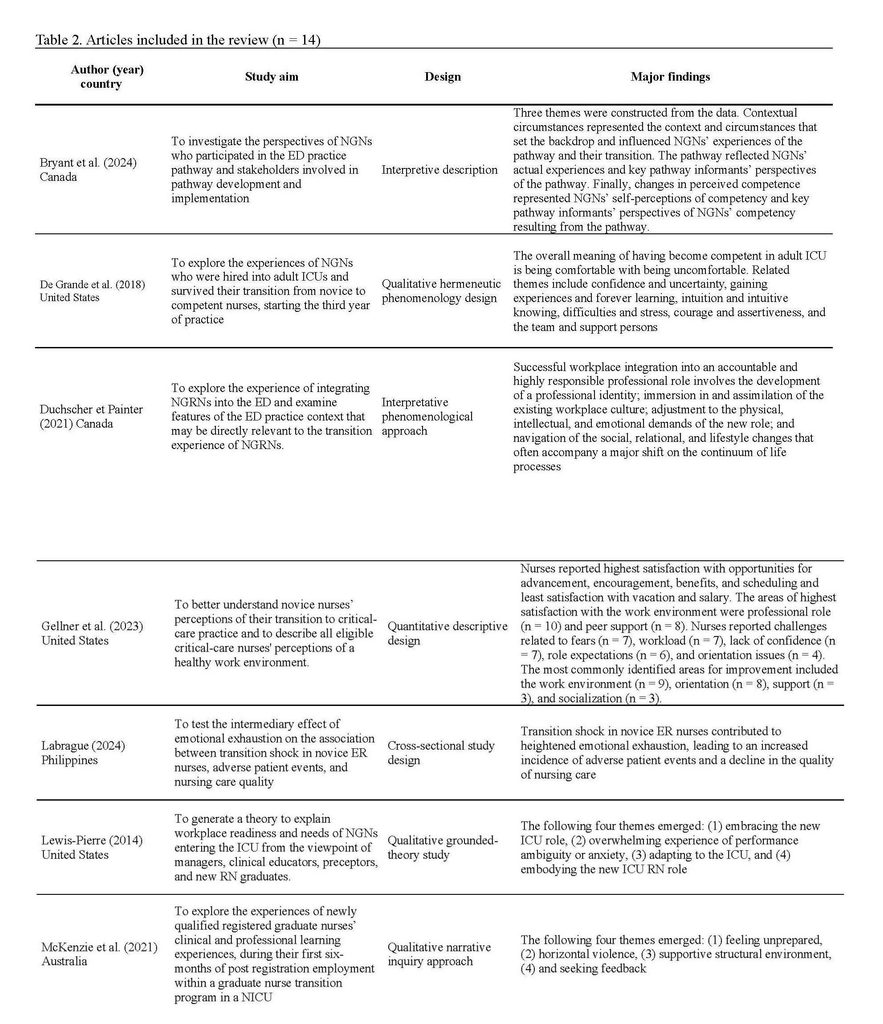
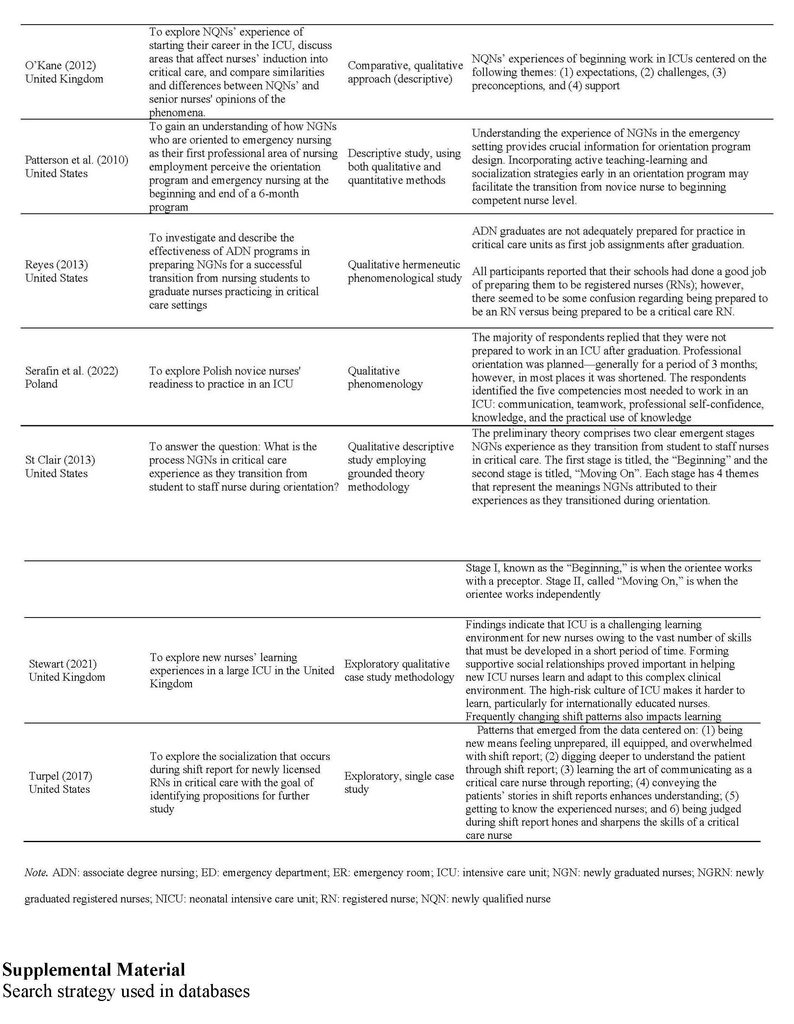
Across the 14 included studies, psychological and emotional challenges were the most frequently reported aspect of NGNs’ professional transition in critical care, appearing in all studies (32 occurrences, defined as coded instances across the included articles). Adaptation to critical care was also widely documented, with 26 occurrences across 11 studies. The need for support and guidance was identified in 10 studies (16 occurrences), while preparation for clinical practice was discussed in 8 studies (16 occurrences). Skill development was the least frequently reported aspect, appearing in 7 studies (13 occurrences). Most studies addressed more than one aspect of the professional transition. These aspects are presented below and offer an in-depth understanding of the main dimensions characterizing the professional transition of NGNs in critical care settings.
Preparation for clinical practice
This first aspect encompasses NGNs’ perceptions of their theoretical and practical preparation before they enter critical care settings. It emphasizes the perceived gap between academic training and clinical expectations, a phenomenon widely documented in the literature (Bryant et al., 2024; Lewis-Pierre, 2014; Reyes, 2013). This theory–practice gap is particularly pronounced in critical care units, with NGNs typically feeling well prepared to assume the general nursing role but ill-equipped to fully take on the responsibilities of a critical care nurse (Reyes, 2013).
Several authors attribute this misalignment between academic and clinical environments to a lack of specific preparation, particularly insufficient exposure to the complex clinical cases encountered in critical care during academic training (Duchscher & Painter, 2021; Gellner et al., 2023; Reyes, 2013). The two main factors that explain this lack of exposure are limited clinical placement hours in critical care settings and large clinical group sizes that restrict learning opportunities (Serafin et al., 2022).
Inadequate preparation can adversely impact NGNs’ perceived competence. For instance, they report difficulties in articulating clinical observations and documenting them appropriately in patient charts, leading to concerns about the legal aspects of practicing in critical care (Serafin et al., 2022). Consequently, NGNs often experience heightened apprehension when caring for clinically unstable patients (Reyes, 2013). Duchscher and Painter (2021) emphasize that NGNs are not adequately prepared to manage high-acuity care or witness traumatic situations, exacerbating their work-related stress. Additionally, specific clinical situations, such as end-of-life care in critical care contexts increase discomfort among NGNs, who often feel unprepared to support patients and families during these emotionally intense moments (Gellner et al., 2023).
Thus, early exposure to critical care during nursing education could play a key role in facilitating NGNs’ professional transition (Bryant et al., 2024; O’Kane, 2012). Bryant et al. (2024) highlight the importance of enculturating nursing students into the norms and practices of critical care environments during academic training. This process is a determining factor in promoting smoother transition during the first three months of professional practice (Bryant et al., 2024; O’Kane, 2012). Considering the evidence synthesized of early exposure, strengthening academic preparation and increasing exposure to critical care during nursing education may help bridge the theory–practice gap, thereby facilitating the subsequent integration of NGNs into critical care settings (Bryant et al., 2024; Duchscher & Painter, 2021)
Adaptation to critical care
Adaptation to critical care represents a considerable challenge for NGNs, given the complexity of clinical environments, professional culture, and specific working conditions of these settings. This process involves immersion in the dominant culture, the gradual development of a professional identity, and acquisition of essential competencies.
Adaptation begins with immersion in the unit’s culture. However, NGNs’ fear of appearing incompetent is a major barrier (Serafin et al., 2022), forcing them to navigate a delicate balance between demonstrating confidence and maintaining humility to build credibility (DeGrande et al., 2018). Over time, positive socialization experiences and support from more experienced colleagues enhance their confidence, thereby facilitating their adaptation to critical care (Patterson et al., 2010; Serafin et al., 2022; Stewart, 2021).
In the early stages of practice, NGNs tend to adopt a prescriptive and linear approach, focusing primarily on the execution of specific tasks (Duchscher & Painter, 2021; O’Kane, 2012; Reyes, 2013), reflecting the absence of tacit knowledge and specific competencies required in critical care (Duchscher & Painter, 2021). Documented challenges include clinical assessment, recognition of subtle clinical changes, prioritization of care, management of critical care medications, and communication with other members of the clinical team (Duchscher & Painter, 2021; Labrague, 2024; Lewis-Pierre, 2014; Serafin et al., 2022). Intraprofessional communication also poses a major challenge, particularly during shift report, which is often perceived by NGNs as stressful and intimidating owing to their difficulties in synthesizing and prioritizing relevant clinical information (Turpel, 2017).
Finally, several authors emphasize that the environment and working conditions in critical care directly influence NGNs’ adaptation. The clinical setting, high workload, and emotional demands may occasionally prevent NGNs from delivering safe care, which negatively affects their transition experience (Gellner et al., 2023; Labrague, 2024; Patterson et al., 2010). Thus, stability and consistency at the start of their careers are especially important in facilitating adaptation and allowing NGNs to gradually develop confidence and autonomy (Stewart, 2021).
Skill development
This third aspect addresses the progression of clinical competencies and the gradual development of professional confidence as NGNs gain experience in critical care settings.
Right from their orientation, NGNs express a clear preference for exposure to clinical cases and hands-on experiences (Reyes, 2013; St Clair, 2013). They often feel oversaturated with theoretical training because of their academic background (Patterson et al., 2010). Moreover, NGNs report difficulties balancing full-time work with the obligation to attend additional theoretical training sessions.
Several studies, therefore, highlight the importance of prioritizing practical learning to support skill development during NGNs’ professional transition. Gellner et al. (2023) mention the value of pedagogical approaches that focus on clinical experience, while Patterson (2010) underscores the effectiveness of active learning strategies in progressing from novice to competent nurses, the third stage of Benner’s (1982) theory of skill acquisition. Among these strategies, simulation is particularly relevant as it facilitates the development of psychomotor skills and the understanding of complex scenarios, addressing NGNs’ need to practice and refine their abilities to manage various clinical situations encountered in critical care settings (Patterson, 2010).
A major challenge for NGNs is the development of clinical judgment, a core competency in critical care (Lewis-Pierre, 2014). Supernumerary orientation, clinical exposure, and time are key factors in fostering the development of clinical judgment and professional intuition (De Grande et al., 2018; St Clair, 2013; Turpel, 2017). Although the latter is a debated concept in the literature, it remains central to the fifth stage of Benner’s (1982) model of skill acquisition. At this expert stage, nurses develop an intuitive understanding of clinical situations, which is crucial to recognize early signs of patient deterioration and make sound clinical decisions (Lyneham et al., 2008). This professional intuition is believed to develop progressively through the integration of theoretical knowledge, the accumulation of clinical experience, and learning from intuitive episodes, enabled by an internal feedback process triggered when intuition guides action (McCutcheon & Pincombe, 2001).
Psychological and emotional challenges
This fourth aspect refers to the psychological and emotional challenges experienced by NGNs during their professional transition, highlighting the prominence of transition shock in the first months of practice. This aspect is widely documented across the identified studies.
From the outset of their careers, NGNs become aware of their lack of preparation for working in critical care settings (McKenzie et al., 2021; Reyes, 2013). The realities of clinical practice and demanding professional expectations, particularly in caring for clinically unstable patients, contribute to feelings of uncertainty and diminished confidence among NGNs at the start of their careers (De Grande et al., 2018; Lewis-Pierre, 2014), exacerbated by shortened orientation periods, which limit the opportunity for gradual adjustment to the clinical environment (McKenzie et al., 2021; Serafin et al., 2022).
Simultaneously, many NGNs report negative experiences related to the attitudes of experienced nurses, describing feelings of rejection, intimidation, and judgment (Bryant et al., 2024; De Grande et al., 2018; Reyes, 2013). For example, some experienced nurses express reluctance to welcome new NGNs, openly voicing the view that nurses should gain experience in acute care units before working in critical care (Bryant et al., 2024; Reyes, 2013). Others refuse to support NGNs or simply avoid answering their questions (Bryant et al., 2024), leading to heightened stress as NGNs feel pressured to prove themselves (Reyes, 2013). Many also experience persistent self-doubt related to the responsibilities of autonomous practice following orientation (Gellner et al., 2023; McKenzie et al., 2021; O’Kane, 2012; Patterson et al., 2010; Serafin et al., 2022; St Clair, 2013). The accumulation of these negative emotions can result in emotional exhaustion, undermining motivation, engagement, and the capacity to meet patients’ needs (Labrague, 2024).
The psychological and emotional challenges described in the literature are often framed as components of transition shock, primarily stemming from the gap between NGNs’ expectations and clinical realities (De Grande et al., 2018). This shock appears to be experienced by all NGNs, regardless of their individual characteristics. In other words, transition shock does not vary according to gender, age, educational background, or employment status (Labrague, 2024). During this period, documented emotional responses range from mild nervousness to feeling completely overwhelmed (De Grande et al., 2018; McKenzie et al., 2021; St Clair, 2013; Turpel, 2017).
The need for support and guidance
This fifth aspect emphasizes the importance of dedicated resources to support and guide NGNs. To facilitate a healthy professional transition and ensure the retention of the nursing workforce, healthcare organizations must implement multiple strategies.
The studies included in this review highlight the need for experienced, trained, and dedicated staff to educate and support NGNs. Structured support that aligns with academic preparation is crucial to help NGNs adapt to clinical practice (Bryant et al., 2024; Duchscher & Painter, 2021; Lewis-Pierre, 2014; Serafin et al., 2022). Preceptor nurses (staff nurses working on the unit who guide the students) are consistently identified as key figures who positively influence the transition experience, particularly when they are available and engaged in their role (O’Kane, 2012). This support is critical during unsociable working hours (evenings, nights, weekends), when experienced nurses are limited, yet sustained supervision is still required for NGNs to progress toward autonomous practice (Lewis-Pierre, 2014; McKenzie et al., 2021). However, preceptors may occasionally struggle to determine the appropriate level of support needed to foster NGNs’ development (O’Kane, 2012). Additionally, balancing learning opportunities with patient safety in critical care contexts can be challenging (Stewart, 2021), further highlighting the importance of preceptors specifically trained to support NGNs.
Beyond preceptors, the entire care team plays an essential role in NGNs’ transition. Experienced nurses, for example, should recognize the challenges NGNs face and provide support whenever possible to facilitate their adaptation to clinical practice realities (Stewart, 2021). Interactions with team members also enable NGNs to gain experience and learn, ultimately helping build their confidence (De Grande et al., 2018; Duchscher & Painter, 2021). Turpel (2017) identifies shift handovers as key opportunities for NGNs to learn from colleagues and continue their professional development. Teamwork is a vital component of a healthy transition (Reyes, 2013).
Another significant challenge highlighted in this review is NGNs’ dissatisfaction with the feedback they receive early in their careers, which they perceive as overly harsh, overly direct, or simply absent. A lack of feedback has been linked to increased anxiety among NGNs, despite most expressing openness to constructive criticism (McKenzie et al., 2021). Frequent feedback has been identified as a success factor, as it helps meet learning needs and maximizes professional development (Patterson et al., 2010).
To effectively meet NGNs’ needs, organizations must foster a culture of collaboration and mutual support within teams rather than relying solely on preceptors (De Grande et al., 2018). They must also recognize the importance of NGNs’ support networks, both within and outside clinical settings. While organizations have little control over NGNs’ personal lives, positive leadership can help promote a healthy work–life balance (De Grande et al., 2018). Flexible scheduling that preserves opportunities for social connections and rest may also contribute to a healthier transition.
Discussion
This scoping review allowed us to map the current state of knowledge on NGNs’ professional transition in critical care, understand the challenges they experienced when beginning their careers in these settings, and identify contexts that promote a successful transition into these environments. The findings highlight five crucial aspects of NGNs’ professional transition in critical care.
Among these five aspects, psychological and emotional challenges are recurrently addressed across all reviewed studies, underscoring the considerable burden associated with the transition experience. Adaptation to critical care was also widely documented in most studies (11 of 14), emphasizing the many adjustments required for a successful transition. Nevertheless, three aspects of the professional transition in critical care remain underexplored in research: preparation for clinical practice, skill development, and the need for support and guidance. These findings highlight gaps in the current literature and the need for future research to investigate these dimensions of the transition experience.
Accordingly, the following section offers a critical analysis of the five aspects identified in this review, comparing them with findings from other studies. While the literature largely converges on the challenges associated with NGNs transition to critical care, this discussion also engages with alternative interpretations.
Preparation for clinical practice is the first key aspect underlying NGNs’ transition to critical care settings. Although the theory–practice gap has been long documented (Landers, 2000; Rolfe, 1993), several authors contend that this gap is even more pronounced in critical care environments (Hussein et al., 2019; Innes & Calleja, 2018). According to Patterson et al. (2010), these settings are particularly challenging because of the intensity of the work pace, broad skill set required, and high level of clinical complexity.
Several factors contribute to the gap between theoretical education and clinical practice. First, students often report insufficient opportunities during clinical placements to apply and integrate the knowledge acquired in theory courses (Singh et al., 2024). It is not uncommon for clinical placements to occur in units that do not reflect the content taught in the curriculum or for students to have limited access to critical care settings, resulting in suboptimal preparation for practice (Elias & Day, 2020). Moreover, Singh et al. (2024) note that nursing students frequently have a limited understanding of the nurse’s role. This lack of clarity may be partly attributed to curricula that are not closely aligned with real-world practice and to ambiguities surrounding learning objectives during clinical placements.
The lack of collaboration between educational institutions and clinical settings also plays a role, further compounded by clinical instructors who may lack sufficient experience (Singh et al., 2024). The unfamiliarity of clinical instructors with unit-specific procedures is an additional barrier to effectively bridging theory with practice (Gassas, 2021). This can even lead to tensions and disrespectful behavior toward clinical instructors from experienced nurses (Singh et al., 2024). Furthermore, even in the presence of preceptors, a persistent gap between theory and practice remains. In a preceptorship context, experienced nurses tend to maintain task-focused routines that may not align with the evidence-based care taught in the academic program (Gassas, 2021).
Overall, these findings highlight the critical role played by clinical educators and preceptors in reducing the theory–practice gap. These individuals are essential to not only helping students put classroom knowledge into practice but also ensuring that learning objectives are achieved. These observations align with the findings of the present scoping review, which underscore the value of clinical placements in critical care settings to foster a smoother professional transition into complex practice environments (Bryant et al., 2024; O’Kane, 2012).
Beyond curricular and clinical exposure, preparation for practice must also be understood through a broader professional and developmental lens that contrasts with deficit-oriented explanations of unpreparedness. Embedded within healthcare’s professional and organizational cultures, graduation is often framed as the endpoint of a developmental journey. This framing may reinforce the expectation that NGNs should already function as fully autonomous professionals (Duchscher, 2008; Gassas, 2021). Such expectations may compel NGNs into forms of autonomy that are misaligned with their developmental needs at the outset of practice (Hussein et al., 2019; Reebals et al., 2022). While graduation confers the formal status of being a nurse, the process of becoming a nurse has just begun. This distinction helps illuminate, in part, the ambiguity experienced by NGNs during their first months of practice.
Many NGNs enter the workforce with the expectation that nursing practice primarily consists of applying learned knowledge to predefined situations. As practice unfolds, however, they encounter the plural, uncertain, and unpredictable nature of care, giving rise to a tension between being a nurse and feeling like one (Duchscher, 2009; Charette et al., 2019). This tension becomes particularly salient in critical care settings, where complexity, instability, and high-acuity situations intensify the demands placed on NGNs (DeGrande et al., 2018; Wakefield et al., 2023). Consequently, the challenge extends beyond preparation for practice and into the broader process of adaptation to critical care settings.
Adaptation to critical carebegins with awareness of the realities of the clinical environment, including the work setting, the high acuity of care, and the instability of patients’ conditions (Duchscher & Painter, 2021; Gellner et al., 2023; Lewis-Pierre, 2014). This adaptation also involves immersion in the dominant culture and an evolving sense of professional identity. The former is expressed through a desire to be accepted by fellow nurses (Duchscher & Painter, 2021).
Several literature reviews have highlighted the importance of socialization during professional transition (Hampton et al., 2021; Innes & Calleja, 2018; Wakefield et al., 2023). Peer recognition and a sense of belonging within the team are key elements of a successful transition. Conversely, feeling like an outsider in the care team is alienating for NGNs (Wakefield et al., 2023). Developing a sense of belonging to the profession and the team is therefore a fundamental lever enabling NGNs to construct their professional identity and envision their future role in any care setting (McClunie-Trust et al., 2024). Socialization supports NGNs in building their identity by gradually adopting the core values, norms, and nursing knowledge , while becoming familiar with their unit’s policies, procedures, and routines (Hampton et al., 2021; Innes & Calleja, 2018). This socialization process is shaped by organizational factors including unit culture, the quality of interprofessional relationships, and available support structures (McClunie-Trust et al., 2024). These findings, combined with the results of our scoping review, reinforce the idea that the entire care team plays a role in NGNs’ professional transition (De Grande et al., 2018; Duchscher & Painter, 2021; Stewart et al., 2021), and emphasize the need to foster a supportive and inclusive environment to ensure the successful transition of NGNs into critical care practice.
Skill developmentspecific to critical care is a central concern for NGNs. Although many report feeling underprepared for professional practice, the literature paints a more nuanced picture. A systematic review found that the skill level of NGNs is generally assessed as good, acceptable, or adequate (Charette et al., 2020), corresponding to the novice or advanced beginner stage in Benner’s (1982) model. This finding is consistent with NGNs’ limited clinical experience. A scoping review by Masso et al. (2022), supports this view, concluding that criticisms and concerns about NGNs’ competencies are often amplified by unrealistic expectations in clinical settings. Specifically, the high demands of caring for clinically unstable patients contribute to NGNs’ sense of uncertainty and loss of confidence early in their careers (De Grande et al., 2018). Thus, NGNs’ feelings of insecurity may not necessarily reflect a true deficit in knowledge and skills but a subjective perception of being insufficiently prepared (Elias & Day, 2020; Kaldal et al., 2023; Masso et al., 2022). This perspective challenges dominant clinical narratives that frame NGNs in terms of skill deficits and instead situates competence development within a normal trajectory.
Clinical judgment is recognized as one of the most challenging competencies to master early in practice. A systematic review by Mendívil-Pérez et al. (2025) identified clinical simulation as the most commonly used educational intervention for developing this skill. However, according to Bussard et al. (2024), while clinical judgment is routinely assessed in academic contexts, it is rarely evaluated in practice settings, especially during NGNs first year of clinical work. This underscores the absence of structured clinical judgment assessments in practice settings. To address this issue, the authors recommend implementing a validated tool to support longitudinal assessment at regular intervals, which would help guide feedback and promote NGNs’ professional growth. The use of such a standardized instrument could facilitate reflection-in-action and strengthen NGNs’ clinical judgment (Bussard et al., 2024).
Finally, recognizing that skill development is a gradual process, progressing as experience is gained, is essential. Over time, NGNs become better at setting priorities, taking appropriate actions, and mobilizing available resources (De Grande et al., 2018). Thus, organizations must adjust their expectations and allow NGNs the time they need to progress in a healthy and sustainable manner across the various stages of their transition to critical care (Duchscher, 2008).
Psychological and emotional challengesidentified in this literature reviewalign with findings from other authors. Several studies highlight the intensity and variability of emotions experienced by NGNs, ranging from excitement to fear (Elias & Day, 2020; Wakefield et al., 2023). This emotional lability is especially evident during the first weeks of practice, when the initial enthusiasm gives way to feelings of insecurity, anxiety, and self-doubt (Wakefield et al., 2023).
This emotional imbalance may be partly attributed to the transition shock described by Duchscher (2009). Masso et al. (2022) further argue that most NGNs will inevitably experience some degree of transition shock, regardless of the clinical setting, given the significant shift from the structured, relatively predictable academic environment to new practice expectations and responsibilities. From this perspective, emotional distress is understood as a normative developmental response rather than an indicator of individual inadequacy.
While transition shock is typically limited to the first few weeks or months after entering the profession, some elements of transition shock may persist throughout the first year of practice. Nevertheless, Hampton et al. (2021) note that negative emotions tend to decrease as NGNs grow more comfortable within their unit and more familiar with their role, highlighting the early months of practice as a pivotal period in the transition process.
Psychological and emotional challenges, coupled with negative perceptions of NGNs’ role or work environment, are key contributors to burnout and turnover in clinical settings (McIntyre et al., 2024; Polat, 2018; Reebals et al., 2022; Wakefield et al., 2023). In light of this reality, the need for structured support and guidance becomes especially meaningful.
The need for support and guidanceis the cornerstone of a successful professional transition for NGNs in critical care settings. Numerous studies highlight the vital importance of having a dedicated resource person with strong interpersonal, educational, and clinical skills to bolster NGNs’ confidence, competence, and sense of support (Elias & Day, 2020; Hussein et al., 2019; Innes & Calleja, 2018; Kreedi et al., 2021). Hussein et al. (2019) emphasize that appropriate clinical supervision and realistic assignment of responsibilities help prevent NGNs from being placed in clinical situations that exceed their skill level, thereby supporting their intent to remain in their current specialty.
Moreover, the quality of interactions with mentors profoundly shapes their transition experience. Although NGNs appreciate exposure to diverse clinical approaches, they also emphasize the need for consistency and stability in the guidance they receive. Frequent mentor changes can create feelings of insecurity and hinder their integration into the team (Elias & Day, 2020).
Finally, a positive work environment supported by structured transition programs and an inclusive team culture not only facilitates NGNs’ integration into critical care but also promotes their retention in these practice settings (Kreedi et al., 2021).
These findings collectively highlight the critical role of organizational support and high-quality clinical mentorship in ensuring a healthy professional transition in critical care contexts.
Implications for nursing education and practice
The findings of this review reinforce the following avenues for action to promote a healthy professional transition in critical care settings:
- Strengthening the integration of theory and practice by offering clinical placements that more closely reflect the realities of critical care environments.
- Improving collaboration between educational institutions and clinical practice settings to ensure that theoretical knowledge is seamlessly incorporated into practice.
- Implementing evaluation tools that allow longitudinal tracking of skill development during the first year of practice.
- Developing structured transition programs focused on clinical support and the progressive development of competencies and adjusting professional expectations by acknowledging the time required to develop expertise and autonomy in critical care practice.
Beyond these recommendations, it is essential to recognize professional transition not merely as a vulnerable period to be mitigated but also as a pivotal opportunity for professional development. This period represents a key phase in the process of professionalization, where NGNs develop clinical competencies, internalize the norms and values of the profession, and progressively construct their professional identity (Bélisle et al., 2021). Embracing this period as a foundation for long-term engagement and growth in critical care can contribute to both individual fulfillment and workforce sustainability.
Strengths and limitations
This scoping review followed a rigourous methodology outlined by the JBI. However, several limitations must be acknowledged. First, although the objective was to focus specifically on the transition experiences of NGNs in critical care, the total number of studies included is relatively small. Of the 14 articles, 5 were published more than 10 years ago. Moreover, the included studies covered a broad range of critical care contexts (e.g., emergency departments, general, neonatal, and cardiovascular intensive care units), which limits the transferability of the findings. Only 4 of 14 studies focused specifically on the transition into emergency care settings rather than intensive care. Although these environments share some commonalities, notable differences in the nature and organization of work may significantly influence the transition experience. This limitation raises important questions about the extent to which findings from intensive care contexts can be transferred to emergency care settings.
Conclusion
The results of this scoping review highlight the complexity of NGNs’ transition into critical care settings, confirming well-known challenges, including the emotional burden and the need to adapt quickly to a demanding environment. However, important gaps remain, especially in terms of clinical preparation, skill development, and the need for support and guidance, necessitating a collective re-examination of how to better align academic education with clinical practice, implement structured transition programs, and promote high-quality support and guidance. Future research should investigate these gaps to help improve preparedness for practice and foster the growth of competent critical care nurses. Such efforts are essential not only to support NGNs but also ensure long-term critical care workforce sustainability.